Do You Actually Need Hook Grip Straps, or Is Your Grip the Real Problem?
Quick Answer: Hook grip straps are worth it once your grip consistently fails before your target muscles do on pulling movements like deadlifts and rows — but if grip fails inconsistently or only on your heaviest sets, dedicated grip training often fixes the underlying issue more permanently than gear alone.
The bar slips a rep before you wanted to stop, so hook grip straps look like the obvious answer. Sometimes they are. Sometimes the actual fix is a few weeks of grip-specific work first.

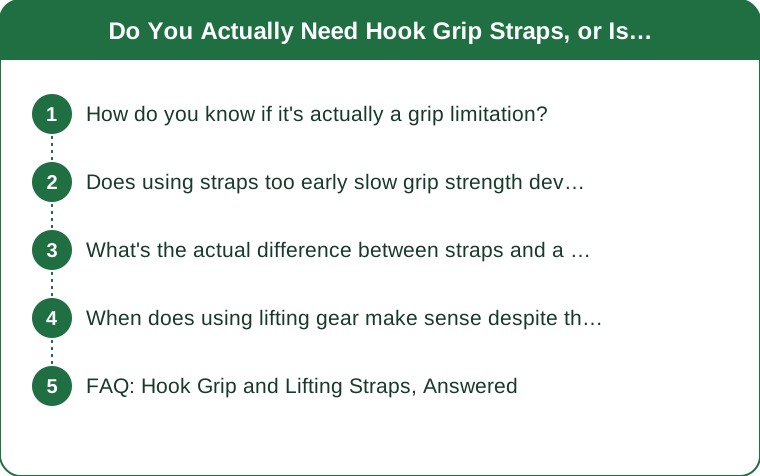
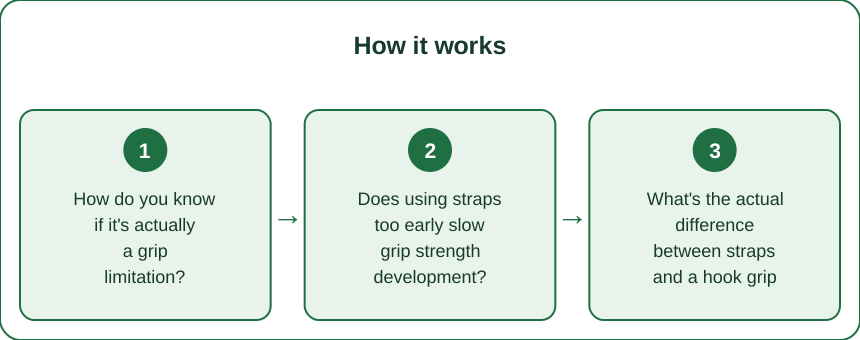
How do you know if it’s actually a grip limitation?
If your back or legs still feel like they have more reps left when your hands give out, that’s a clear grip limitation — the target muscle isn’t the bottleneck, your hands are. If everything fails together, straps won’t isolate much benefit since you’re near your actual limit anyway.
Does using straps too early slow grip strength development?
It can — relying on straps before grip has ever been tested under load means you skip the adaptation stimulus that would otherwise build grip strength naturally over time. Many lifters get more overall benefit long-term from training grip as its own weak point for a few weeks before reaching for straps.

What’s the actual difference between straps and a hook grip technique?
Straps are equipment; hook grip is a technique where the thumb is trapped under the fingers around the bar, creating a locking effect without any gear. Hook grip has a learning curve and initial discomfort but doesn’t require carrying equipment and builds real grip endurance alongside the lift.
When does using lifting gear make sense despite the grip-training tradeoff?
When grip is capping a lift you’re specifically training for size or strength in the target muscle (like back work), and grip fatigue is limiting stimulus to that muscle before it’s fully worked. In that specific case, straps let the target muscle get its full training effect while you train grip separately on dedicated days.
FAQ: Hook Grip and Lifting Straps, Answered
Is hook grip painful to learn?
Initially, yes — the trapped-thumb position feels uncomfortable for the first several sessions, but most lifters adapt within 2-3 weeks of regular practice.
Can you use straps and still train grip strength separately?
Yes, and this is often the ideal approach — straps for main lifts where grip isn’t the target, dedicated grip work (dead hangs, farmer’s carries) on separate days or at the end of sessions.
Do straps help with all pulling exercises equally?
No — they help most on deadlift variations and heavy rows where grip fatigues fastest; on lighter accessory pulling work, grip rarely becomes the limiting factor in the first place.
TL;DR:
- If your target muscle has reps left when grip fails, that’s a real grip limitation worth addressing
- Reaching for straps too early can skip the adaptation that builds grip strength naturally
- Hook grip is a free technique alternative with a learning curve but no gear required
- Straps make sense when grip is capping a lift’s targeted training effect on another muscle
Before buying straps, try a few weeks of dedicated grip work first — it might fix the problem straps were about to mask.
Keep Reading
This article is for general informational and styling purposes only. Fit, sizing, and product availability may vary.