Why Wearing a Lifting Belt Too Early Can Actually Slow Your Progress
A lifting belt genuinely helps once someone has a real base of core bracing strength, but reaching for one too early in training can skip over a foundational adaptation the body needs to build on its own first, which shows up later as a strength gap rather than a shortcut.

Why Early Belt Use Skips a Necessary Adaptation
The skipped step: the belt-provides-external-feedback-that-the-body-would-otherwise-learn-to-generate-internally-through-its-own-core-bracing (the belt providing external pressure feedback that the core would otherwise have to learn to generate entirely on its own through active bracing, and introducing that external crutch before the internal skill is built meaning the internal skill often never fully develops, per the lifting-belt-actual-purpose-explained-guide logic — the belt-providing-external-pressure-feedback-that-the-core-would-otherwise-learn-to-generate-internally-and-introducing-it-before-the-internal-skill-is-built-means-the-internal-skill-often-never-fully-develops), and the reframe (a belt worn too early quietly preventing a foundational strength adaptation, rather than simply adding safety on top of it)).

Signs You’re Actually Ready for a Belt
The real readiness marker: the ability-to-brace-and-maintain-intra-abdominal-pressure-unassisted-through-a-full-heavy-set-without-the-belt (demonstrating the ability to brace and hold intra-abdominal pressure unassisted through a full heavy working set without any belt at all, the actual readiness marker rather than a specific weight number, per the home-gym-gear-priority logic — the demonstrating-the-ability-to-brace-and-hold-intra-abdominal-pressure-unassisted-through-a-full-heavy-set-without-any-belt-is-the-actual-readiness-marker-rather-than-a-specific-weight-number), and the frame (readiness being a skill checkpoint, not a load milestone)).
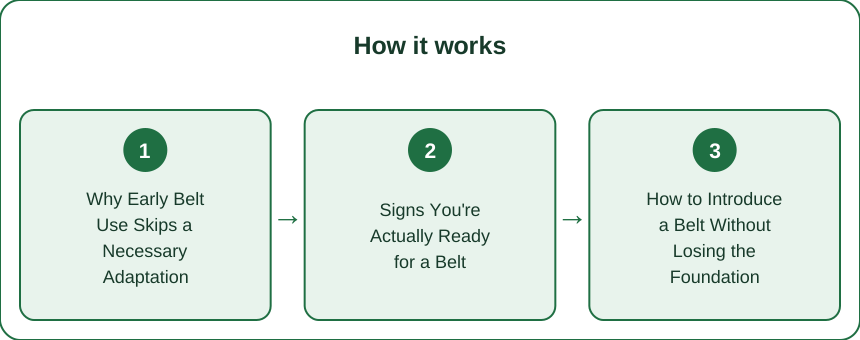
How to Introduce a Belt Without Losing the Foundation
The safe sequence: the continue-training-unbelted-sets-regularly-even-after-adding-a-belt-for-the-heaviest-work (continuing to train a portion of sets completely unbelted even after introducing a belt for the heaviest top sets, keeping the core bracing skill active rather than letting it atrophy, per the wrist-wraps-straps-guide logic — the continuing-to-train-a-portion-of-sets-completely-unbelted-even-after-introducing-a-belt-for-the-heaviest-top-sets-keeps-the-core-bracing-skill-active-rather-than-letting-it-atrophy), and the frame (using a belt as an addition for peak loads, not a full replacement for the unbelted bracing work that built the foundation).
A lifting belt provides external pressure feedback that the core would otherwise have to learn to generate entirely on its own through active bracing, and introducing that external crutch before the internal skill is built means the internal skill often never fully develops, showing up later as a real strength gap. The actual readiness marker is demonstrating the ability to brace and hold intra-abdominal pressure unassisted through a full heavy set without any belt at all, and continuing to train a portion of sets completely unbelted even after adding a belt for the heaviest top sets keeps that core bracing skill active instead of letting it quietly atrophy.
Keep Reading
This article is for general informational and styling purposes only. Fit, sizing, and product availability may vary.