Why Your Lifting Shoes Matter More Than Your Belt
Quick Answer: Shoes affect every single rep of every lift you do standing, while a belt only matters on heavy sets near your limit. A compressible running-shoe midsole absorbs force and creates instability under load; a flat, firm sole transmits force directly to the floor. If you own one piece of lifting equipment, make it footwear.
The gear shopping order almost everyone follows: belt, straps, sleeves, maybe shoes eventually.
Meanwhile they are squatting in running shoes with 30mm of compressible foam under the heel, wondering why the bar drifts forward.
The belt is a fine purchase. It is just not the first one.
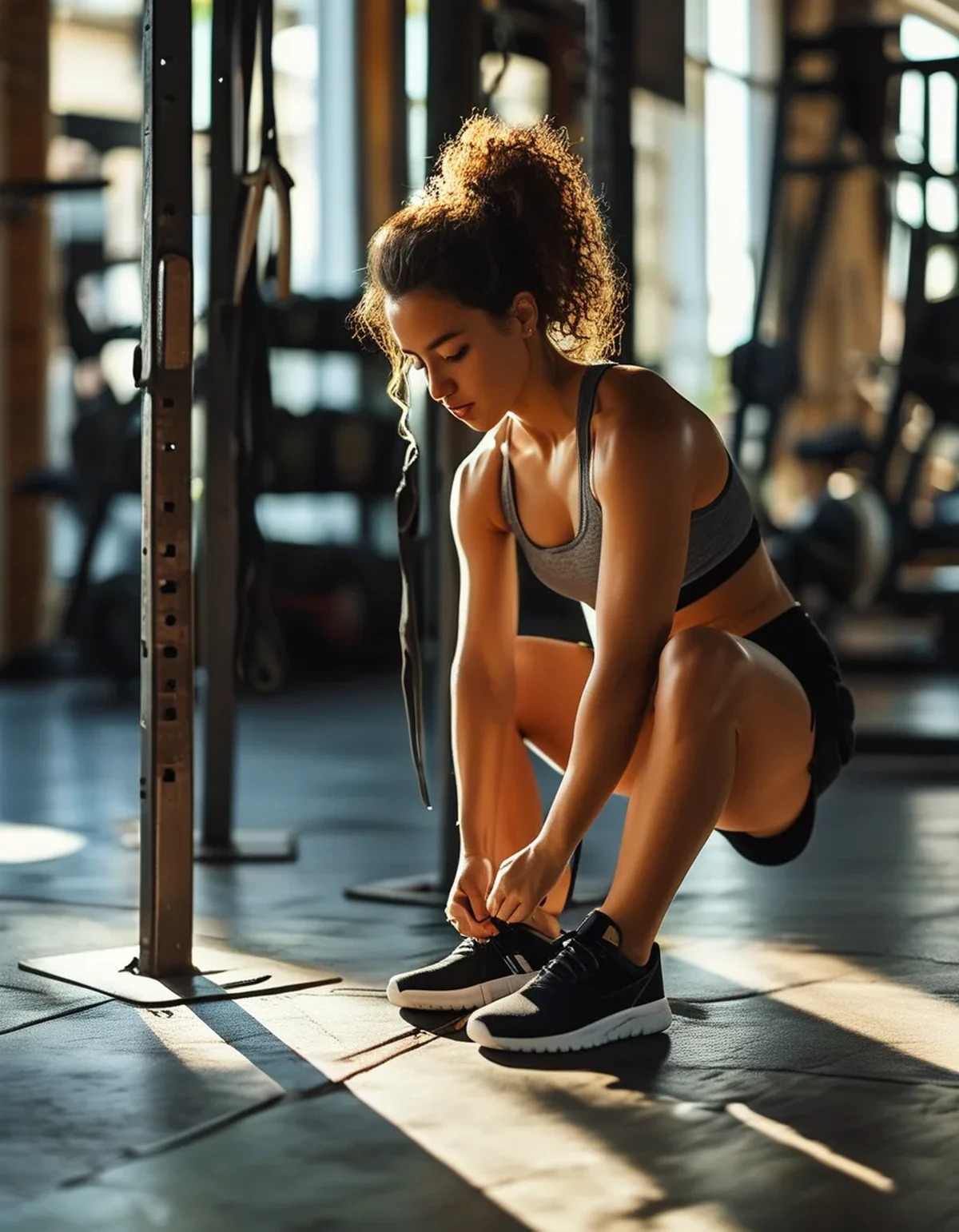
What do soft-soled shoes actually do to a squat?
They put a mattress between you and the floor.
Running midsoles are designed to compress — that is the entire point, absorbing impact over thousands of foot strikes. Under a loaded barbell, compression means three problems:
- Force loss. Energy you generate goes into deforming foam instead of driving the bar. The effect is modest but real, and it grows with load.
- Instability. Foam compresses unevenly. Your ankle makes constant micro-corrections, which your nervous system responds to by reducing force output — a body that does not trust the surface will not fully commit.
- Changing heel height. As the foam compresses through a set, your effective heel height changes rep to rep. Consistency of position disappears.
Deadlifts have an additional issue: a thick sole raises you off the floor, adding range of motion for no benefit, and cushioned heels make it harder to stay back on the mid-foot.
Flat and firm fixes all of that for the price of a modest pair of shoes.
What should you actually be standing in?
Three legitimate options, and they cost very different amounts:
- Flat, firm trainers. Canvas or minimal-sole shoes with a thin rubber outsole. Excellent for deadlifts, hinges, presses, rows, and most squatting. This is the highest value-per-dollar choice in all of lifting gear.
- Barefoot or socks, where the gym allows it. Free, and genuinely good for deadlifts and hinges. Less ideal for heavy squats where you want a stable, grippy platform.
- Weightlifting shoes with a raised heel. Typically 15 to 22mm of hard, non-compressible heel. These help people with limited ankle mobility reach depth with a more upright torso, and they are worth it if you squat frequently and struggle with depth or forward lean.
A practical split: flat shoes for deadlift and accessory work, heeled shoes for squats if you need them. Many people are perfectly served by flat shoes alone.
Test before you buy the heeled option: squat with your heels on two small plates. If depth and torso angle improve dramatically, a heeled shoe will help you. If nothing changes, save the money.

Myth vs Fact: Lifting Footwear
Myth: A belt is the most important piece of lifting equipment.
Fact: A belt helps on sets above roughly 80 to 85 percent of your max by giving your core something to brace against. That is a small fraction of your total reps. Shoes affect all of them.
Myth: Weightlifting shoes are for advanced lifters.
Fact: They are for people with ankle mobility restrictions, which is a large share of beginners. Nothing about them requires experience.
Myth: Barefoot training is always better because it is natural.
Fact: Barefoot is excellent for hinges and useful for foot strength, but a heavy squat benefits from a stable, grippy platform, and gym floors are not always clean or safe for bare feet.
Myth: Expensive lifting shoes lift more weight.
Fact: A $30 pair of flat canvas shoes captures most of the available benefit. The expensive ones are more durable and better fitted, not more effective per rep.
So when do you actually need the belt?
When you are training close enough to your limit that intra-abdominal pressure becomes the constraint — generally heavy sets of squats and deadlifts above about 80 percent, and heavy overhead work.
A few things that make belts work better:
- Position it over the navel, not on the hip bones, for most people. Adjust until you can take a full breath into it.
- Tight enough to push against, loose enough to breathe into. If you cannot draw a full breath, it is too tight and it is doing less, not more.
- Learn to brace without it first. A belt amplifies a brace; it does not substitute for one. Lifters who belt from day one often have a weaker unbelted brace years later.
Belts are useful. They are just the third or fourth purchase, not the first.
FAQ: Lifting Gear Questions, Answered
Can I just squat in socks instead of buying shoes?
For moderate loads, yes. For heavy squats, a firm sole with grip gives you more stability and safety on a slick gym floor.
Do I need different shoes for leg day and everything else?
Not necessarily. Flat trainers handle almost everything. Add heeled shoes only if the plates-under-heels test shows a clear improvement.
What about knee sleeves — where do those rank?
After shoes and around the belt in priority. They add warmth and a little support, and many people find they make heavy squats more comfortable. They are a comfort item more than a performance one.
TL;DR:
- Compressible midsoles cost force, add instability, and change heel height rep to rep
- Flat, firm shoes improve every standing lift and cost very little
- Test heeled shoes with plates under your heels before buying
- Belts matter above roughly 80 percent of max — learn to brace without one first
If you are still squatting in running shoes, that is the single highest-return change available to you this week, and it costs less than most belts.
Keep Reading
This article is for general informational and styling purposes only. Fit, sizing, and product availability may vary.